
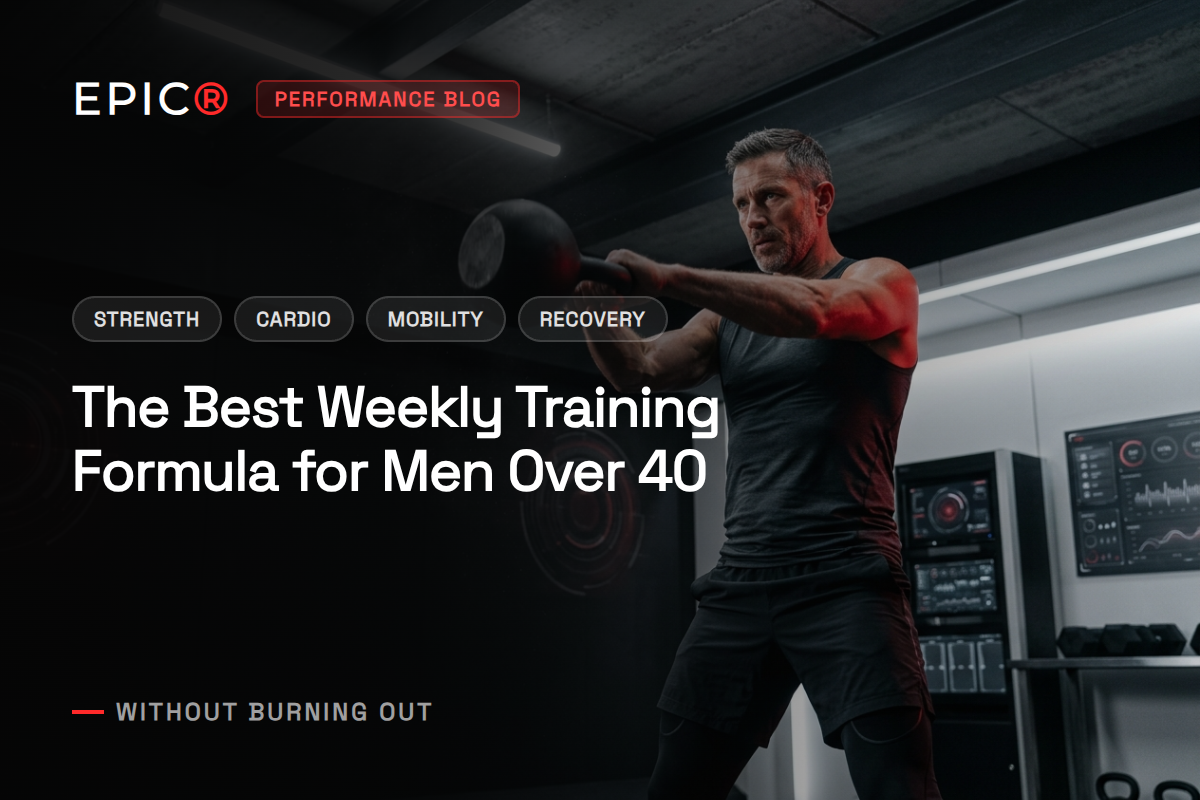
Understanding the Unique Needs of Men Over 40
As men enter their 40s, maintaining optimal health and fitness demands a nuanced approach. Physiological changes driven by reduced testosterone, slower recovery rates, and altered body composition can affect training outcomes and overall well-being. Research shows that muscle mass declines by about 3–8% per decade after age 30, accelerating after 60 (Janssen et al., 2002), while cardiovascular health and flexibility can also diminish without targeted interventions. The key is to balance strength work, aerobic conditioning, mobility, and recovery—without tipping into overtraining or burnout.
The Weekly Training Formula: Four Pillars for Sustainable Progress
A well-rounded program for men over 40 centers on four primary pillars:
- Strength Training: Preserves muscle mass, supports metabolism, and bolsters testosterone.
- Zone 2 Cardio: Improves cardiovascular health and metabolic flexibility.
- Mobility: Enhances joint health, reduces injury risk, and supports functional movement.
- Recovery: Enables adaptation, prevents burnout, and maintains hormonal balance.
Key Takeaway: For men over 40, fitness is about sustainable progress—not endless intensity. A weekly formula blending strength, moderate cardio, mobility, and recovery is science-backed and realistic.
Strength Training: The Foundation for Healthy Aging
Why Strength Matters After 40
Loss of muscle mass (sarcopenia) is a major contributor to declining metabolic health, increased fall risk, and diminished quality of life. Regular resistance training has been shown to combat sarcopenia, improve insulin sensitivity, and boost resting metabolic rate (Mitchell et al., 2012). Importantly, it also supports healthy testosterone levels, which naturally wane with age.
Optimal Frequency and Structure
Current guidelines and meta-analyses suggest that 2–3 full-body or upper/lower split strength sessions per week are ideal for older adults (Peterson et al., 2010). Each session should:
- Target all major muscle groups
- Include compound movements (e.g., squats, presses, rows, deadlifts)
- Use moderate resistance (60–80% of one-rep max)
- Emphasize controlled form and full range of motion
- Incorporate 2–4 sets of 6–12 repetitions per exercise
Sample Weekly Strength Routine
- Monday: Full-body resistance training (45–60 minutes)
- Thursday: Full-body resistance training (45–60 minutes)
Alternatively, an upper/lower split (e.g., upper on Monday, lower on Thursday) works well, especially for those wanting more volume or variety.
Zone 2 Cardio: Heart Health Without Excessive Wear
What Is Zone 2 Cardio?
Zone 2 refers to aerobic exercise performed at 60–70% of your maximum heart rate (MHR). This intensity is challenging enough to improve heart and mitochondrial health, but sustainable enough to avoid excessive fatigue or muscle loss. You should be able to speak in full sentences but feel like you’re working at a moderate level.
Benefits for Men Over 40
- Improves cardiovascular and metabolic flexibility (Seiler, 2010)
- Supports fat oxidation and insulin sensitivity
- Promotes recovery by increasing blood flow without high stress
- Can be maintained for decades—low risk of overuse injury
How Much and How Often?
For substantial health benefits, the American Heart Association recommends at least 150 minutes of moderate-intensity aerobic activity weekly. For men over 40, this is best split into 2–3 sessions:
- Tuesday: 45–60 minutes Zone 2 cardio (cycling, brisk walking, elliptical, swimming)
- Saturday: 45–60 minutes Zone 2 cardio
Some men may prefer shorter, more frequent sessions (e.g., four 30-minute walks). The key is consistency and finding activities that are enjoyable and joint-friendly.
Mobility: The Often-Neglected Pillar
Why Mobility Matters with Age
Mobility—the combination of flexibility, strength, and coordination—declines with age, increasing injury risk and limiting performance. A 2013 study (Stathokostas et al.) found that regular stretching and mobility work improved joint range of motion and movement quality in older adults.
Integrating Mobility Into Your Week
- Dedicate 10–15 minutes at the end of strength or cardio sessions to mobility drills (hips, shoulders, thoracic spine, ankles).
- Include dynamic stretches before workouts and static stretches afterward.
- Consider a dedicated mobility-focused session (e.g., Sunday) for longer routines or yoga.
Example mobility exercises: world’s greatest stretch, deep squat holds, cat-cow, shoulder dislocates, ankle dorsiflexion drills.
Recovery: The Secret Weapon for Consistency
Recognizing the Value of Recovery
Recovery is where adaptation happens. As we age, our ability to bounce back from hard sessions is reduced, making recovery strategies not optional, but essential. Inadequate recovery increases the risk of overuse injuries, hormonal disruption, and burnout (Kellmann et al., 2018).
Effective Recovery Practices
- Sleep: Aim for 7–9 hours per night, as testosterone and growth hormone are released during deep sleep (Leproult & Van Cauter, 2011).
- Nutrition: Prioritize protein (1.2–1.7 g/kg/day), healthy fats, ample fruits and vegetables, and sufficient hydration.
- Active recovery: Gentle walking, stretching, or foam rolling on rest days can promote circulation and speed up healing.
- Stress management: Meditation, breathwork, or hobbies can help regulate cortisol, which impacts testosterone and recovery.
Weekly Recovery Structure
- Wednesday: Active recovery (30–45 minutes of walking, gentle stretching, or yoga)
- Sunday: Rest or light mobility work
Building Your Weekly Training Plan
Here is a sample structure that incorporates all four pillars—strength, cardio, mobility, and recovery—without overwhelming your schedule:
- Monday: Strength + mobility
- Tuesday: Zone 2 cardio + mobility
- Wednesday: Active recovery (walk, stretch, foam roll)
- Thursday: Strength + mobility
- Friday: Rest or light mobility (optional)
- Saturday: Zone 2 cardio + mobility
- Sunday: Full rest or extended mobility/yoga
This template can be adjusted for lifestyle, travel, or specific goals. The non-consecutive strength sessions and spaced cardio allow for muscle and connective tissue recovery, while the built-in mobility and active recovery days keep you moving without chronic fatigue.
Nutritional and Supplement Support for Energy, Hormonal Balance, and Consistency
Nutrition: The Foundation
Maintaining muscle, supporting recovery, and sustaining energy all demand an adequate, balanced diet. Focus on:
- Protein: Critical for muscle maintenance—spread intake across meals.
- Healthy fats: Especially omega-3s, for cardiovascular and hormonal health.
- Micronutrients: Vitamin D, magnesium, zinc, selenium, and B vitamins are vital for testosterone, energy production, and immune support.
- Hydration: Even mild dehydration impairs performance and recovery.
Clinically Studied Supplement Support
For men over 40, targeted supplementation can address common gaps and help maintain consistency:
- Testosterone support: Ingredients such as ashwagandha (Lopresti et al., 2019), fenugreek (Wankhede et al., 2016), and zinc (Prasad, 2013) have demonstrated efficacy in supporting healthy testosterone levels and vitality. A science-backed formula like Epic-T3 or EPIC-T+ delivers standardized doses based on clinical research.
- Daily vitamin packs: Ensure foundational nutrients for energy, immune health, and overall well-being—even when diet isn’t perfect.
- Omega-3 fatty acids: Support cardiovascular health and healthy inflammation response.
- Creatine monohydrate: Well-tolerated, supports strength, cognition, and muscle mass in older adults (Candow et al., 2019).
Before beginning any supplementation regimen, consult your healthcare provider, especially if you take prescription medications or have chronic health conditions.
Supporting Consistency: Mindset and Practical Tips
Sustainable fitness for men over 40 is not about chasing records or relentless intensity, but about building habits that last. Consider these strategies:
- Set realistic goals: Focus on process (weekly sessions, sleep, nutrition) more than outcome metrics.
- Track progress: Use a simple journal or app to log workouts, mood, and sleep.
- Prioritize recovery as much as workouts: Schedule rest and mobility days with the same importance as strength or cardio.
- Join a community: Training partners, online groups, or classes can enhance accountability and enjoyment.
- Listen to your body: Adjust training load based on recovery, soreness, and stress. It’s better to scale back occasionally than to push through fatigue and risk injury.
Conclusion: The Science-Backed Formula for Men Over 40
The optimal weekly training formula for men over 40 is not about doing more—it’s about doing what works, consistently. By blending two strength sessions, two moderate-intensity (Zone 2) cardio sessions, daily or near-daily mobility work, and structured recovery, you can maintain muscle mass, support healthy testosterone, protect your heart, and remain injury-free. Layer in foundational nutrition and evidence-based supplements for hormonal balance and energy, and you create a system built for decades—not just months—of health and performance.
Remember, the goal is not perfection, but sustainable progress. This balanced, science-driven approach empowers you to enjoy your 40s and beyond with strength, energy, and confidence.
References
- Janssen, I., et al. (2002). Skeletal muscle mass and distribution in 468 men and women aged 18–88 yr. Journal of Applied Physiology.
- Mitchell, C.J., et al. (2012). Resistance exercise load does not determine training-mediated hypertrophic gains in young men. Journal of Applied Physiology.
- Peterson, M.D., et al. (2010). Resistance exercise for muscular strength in older adults: a meta-analysis. Ageing Research Reviews.
- Seiler, S. (2010). What is best practice for training intensity and duration distribution in endurance athletes? International Journal of Sports Physiology and Performance.
- Stathokostas, L., et al. (2013). Flexibility training and functional ability in older adults: a systematic review. Journal of Aging Research.
- Kellmann, M., et al. (2018). Recovery and stress in sport: A manual for testing and assessment. Routledge.
- Leproult, R., & Van Cauter, E. (2011). Effect of 1 week of sleep restriction on testosterone levels in young healthy men. JAMA.
- Lopresti, A.L. et al. (2019). Efficacy and safety of ashwagandha root extract in improving sexual function in men and testosterone levels. American Journal of Men's Health.
- Wankhede, S., et al. (2016). Examining the effect of a fenugreek extract on strength, body composition, and hormonal profiles. Journal of Sport and Health Science.
- Prasad, A.S. (2013). Discovery of human zinc deficiency: its impact on human health and disease. Advances in Nutrition.
- Candow, D.G., et al. (2019). Effects of creatine supplementation and resistance training on muscle strength and body composition in older men. Applied Physiology, Nutrition, and Metabolism.